

AC Leak Detection in San Mateo, CA
Vacuum hold test catches the obvious. UV dye + electronic sniffer find the slow ones. We tell you exactly which seal, hose, or valve core is leaking before quoting parts.
An AC system that loses charge has a leak. Replacing parts at random is the most expensive way to fix it. Beacon Auto Care in San Mateo uses three complementary methods — vacuum hold test, UV dye, and an electronic sniffer — to isolate the leak before any part gets quoted.
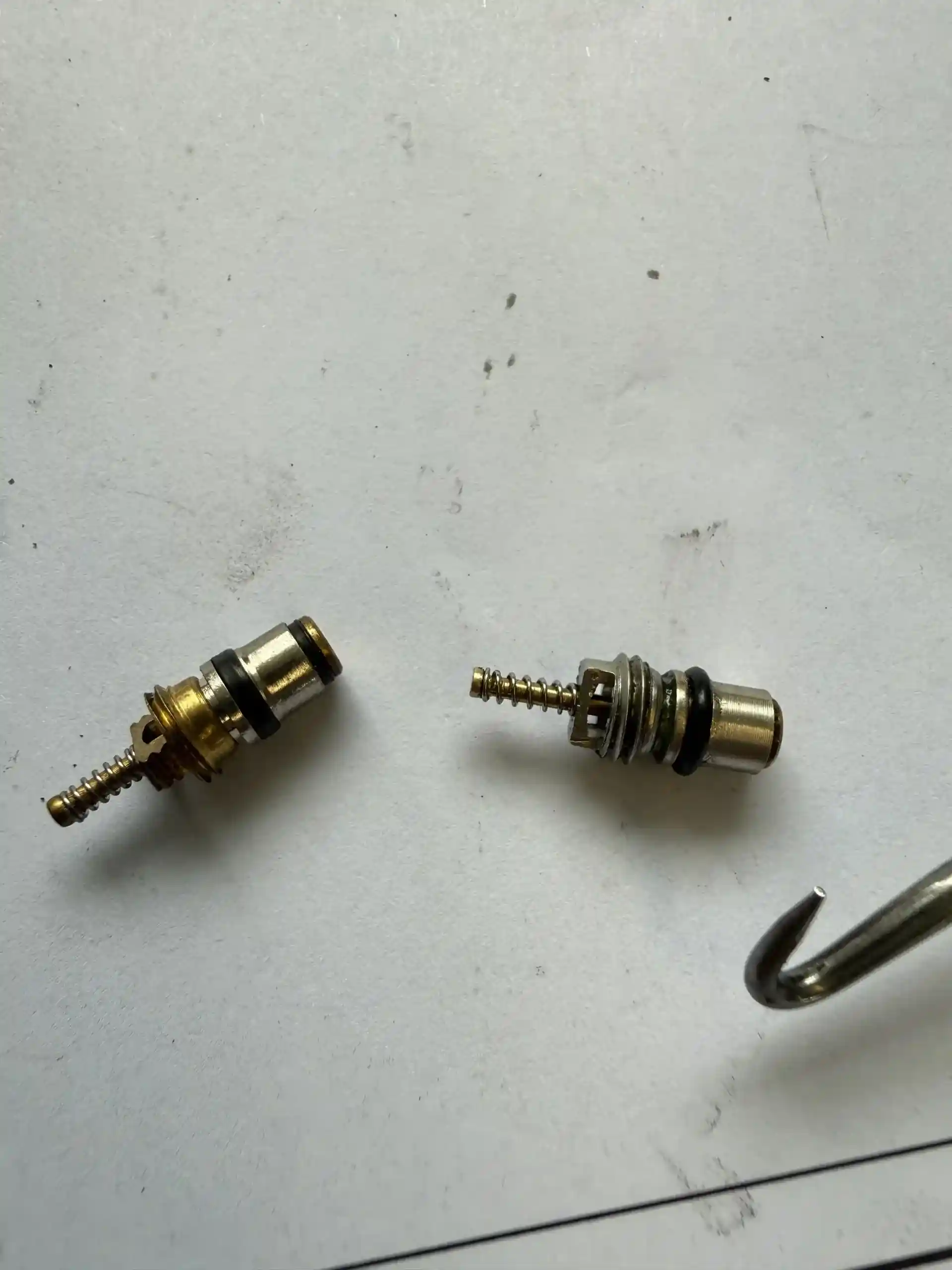
A recent Ford engine bay came in losing charge over a few months. Vacuum held briefly then dropped — leak somewhere. Sniffer test traced it to the AC service-port valve cores (Schrader valves) — the same kind of valve as a tire stem, except 30 years old and hardened. Old vs new core comparison: the original was visibly worn, with the o-ring compressed flat. Replaced both cores, $150 total. Vacuum-held overnight; recharged the next morning — system has been holding ever since.
Detection Sequence
- Vacuum hold test — pull system to deep vacuum; watch the gauge for 30 minutes. Steady = no leak. Rising = leak.
- UV dye injection — small amount of fluorescent dye into the system. Run AC for ~15 minutes, then scan everything with UV light.
- Electronic sniffer — handheld refrigerant detector for hard-to-see locations (evaporator behind dash, deep engine bay).
- Identify and photograph the leak source for the customer.
Common Leak Sources (in order)
- O-rings at line junctions — cheapest fix ($150–$300)
- Condenser — front of car, vulnerable to rocks ($350–$650)
- Compressor shaft seal — $400–$800
- Hoses — $250–$550
- Evaporator — under the dash, most expensive ($1,400–$2,400)
- Three detection methods used as needed
- Photo of the leak source sent to your phone
- Itemized estimate before any repair
- 24-month / 24,000-mile warranty on parts and labor
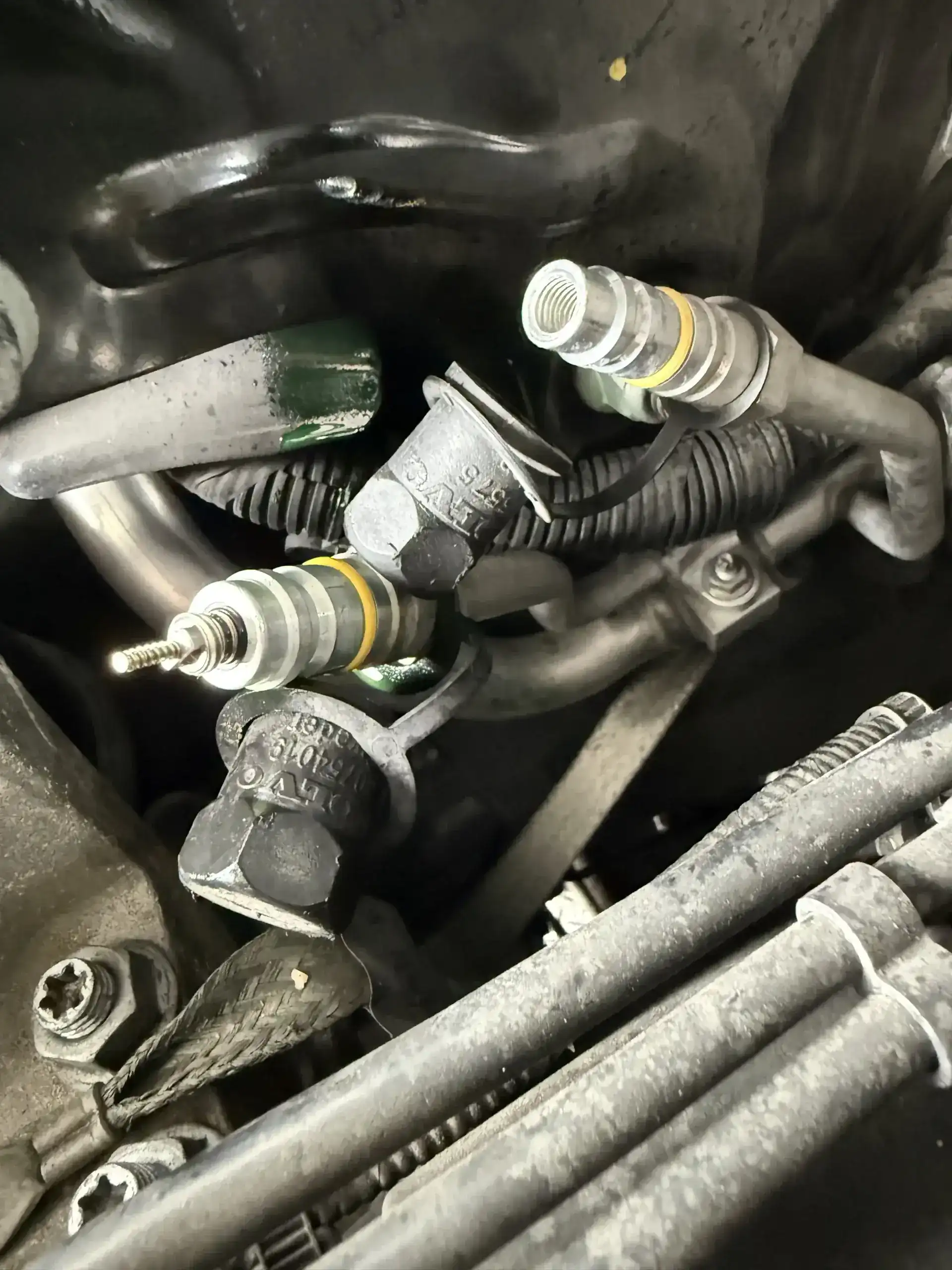
Real AC Valve Stem Job — Recent Land Rover
Customer brought in a Land Rover with AC barely cooling. Vacuum-hold test held tight, but the low-side service-port valve stem was weeping refrigerant under pressure. $150 fix that's lasted past the 24-month warranty window on every car we've done it on. Here's the four-frame story.
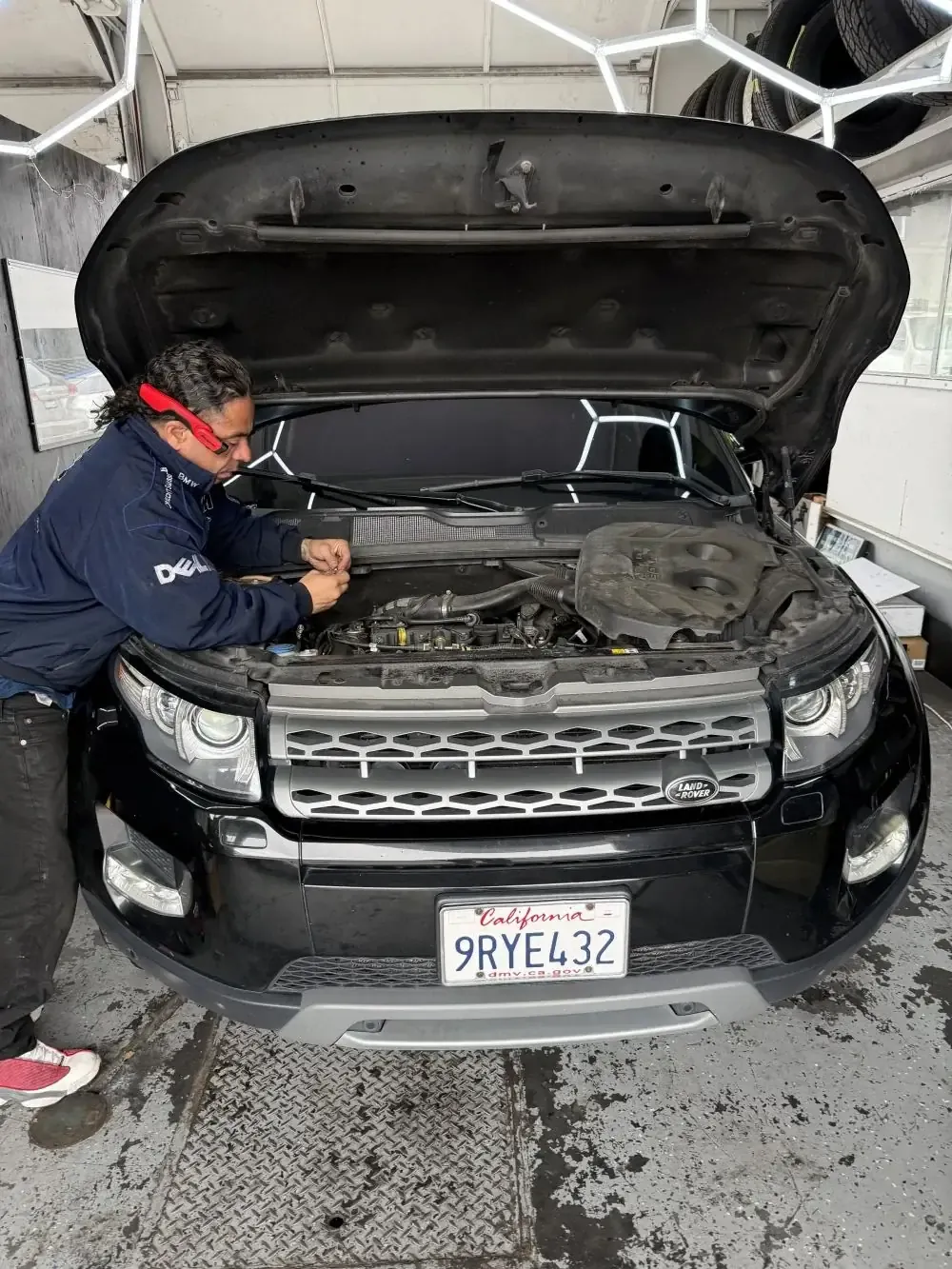
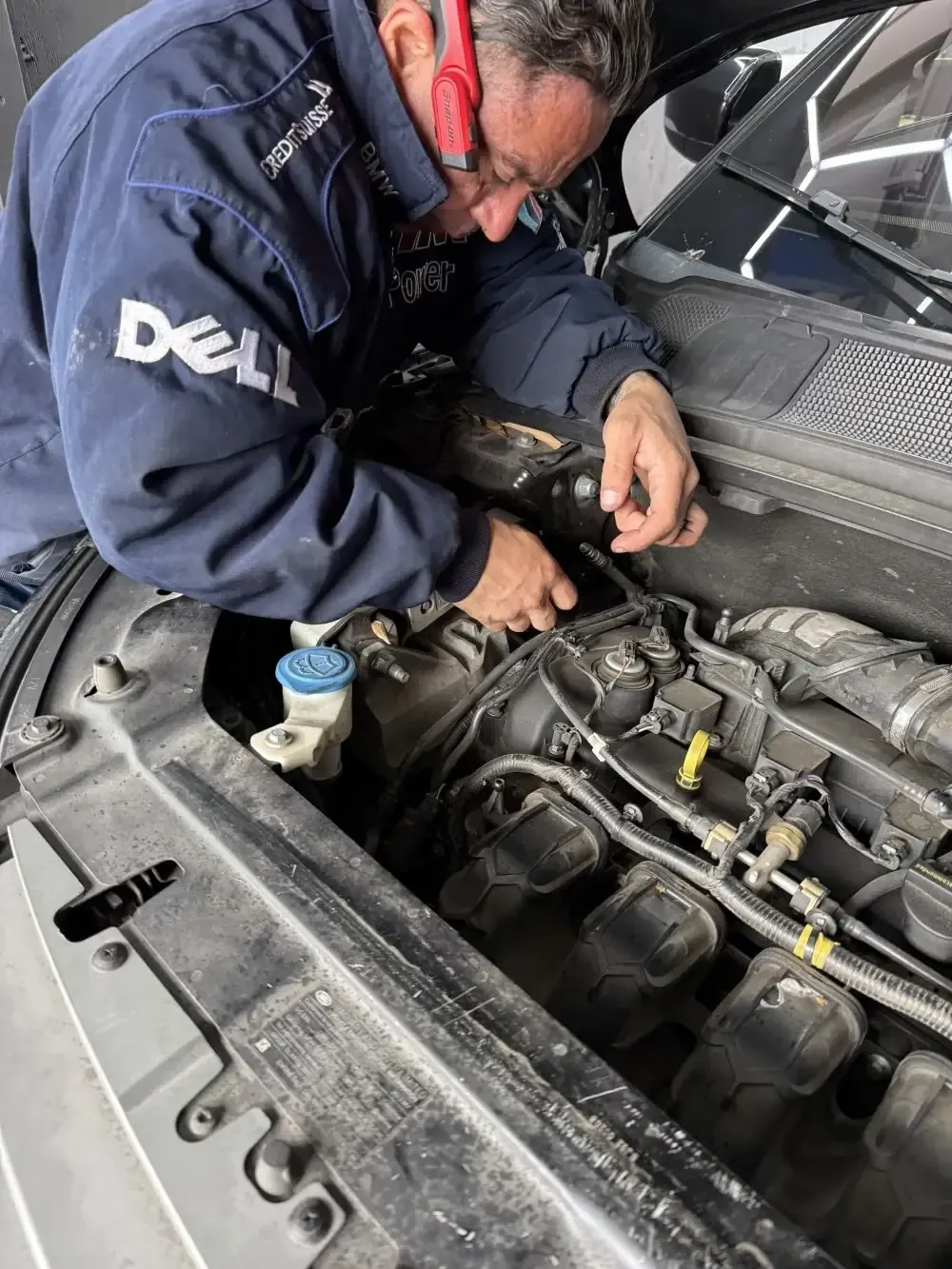
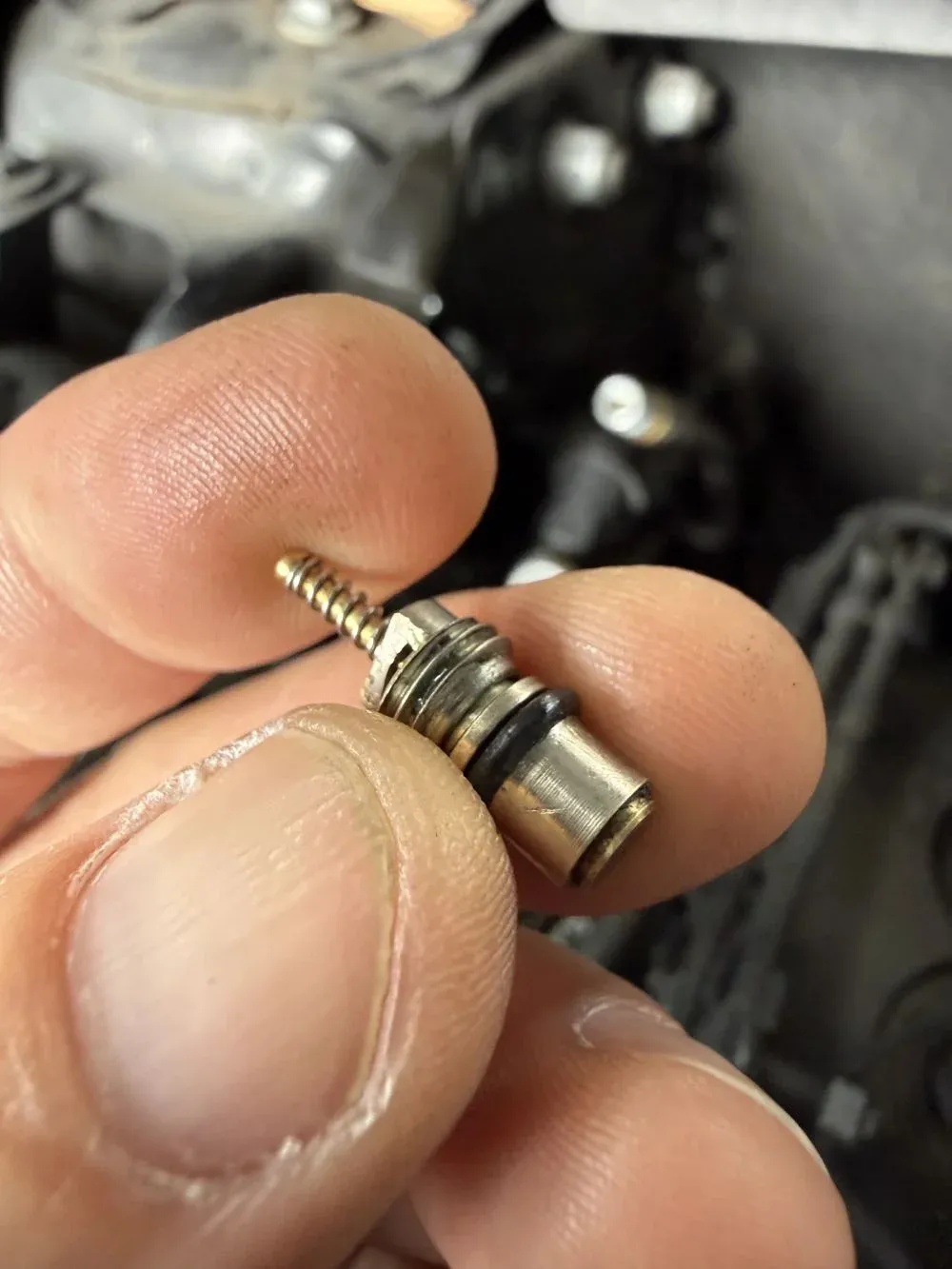
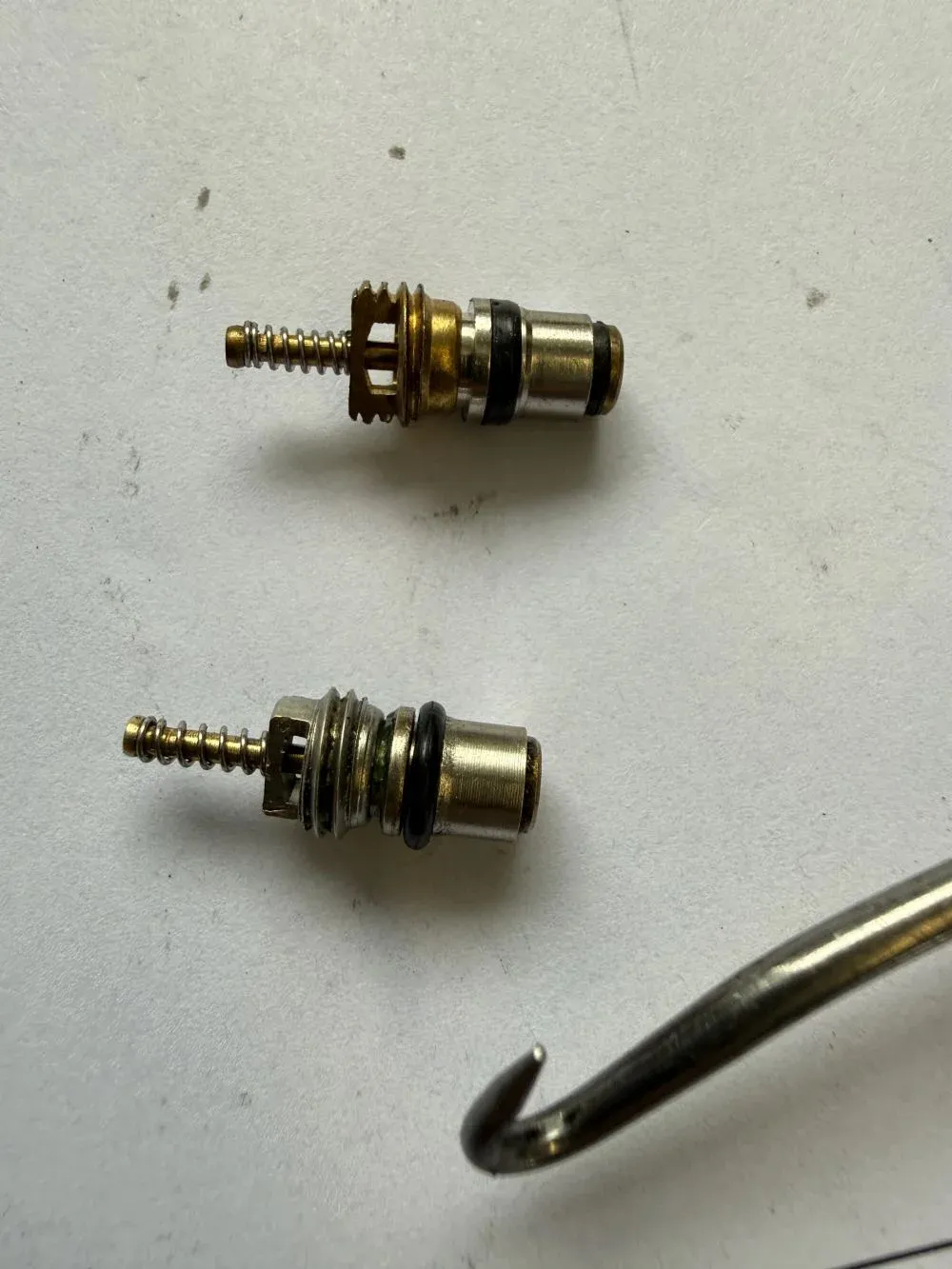
Schrader Valve Inspection — Real Footage
Tight under-hood close-up showing the AC compressor pulley and Schrader-valve service-port fitting on a Ford engine. The same valve core that's the most common slow-leak source.
Common Questions About AC Leak Detection
How we find leaks, what they cost, what's worth fixing.
How do you find an AC leak?
Where do AC leaks usually happen?
How much does AC leak detection cost in San Mateo?
What's the most expensive leak to fix?
If my AC has been empty for years, can I just refill it?
Updated
Related car symptoms
Other symptom? Tap below — or walk through our triage tool .
What San Mateo Drivers Say About AC Service
“Moe came to jump my car after it randomly stopped working one morning. Turns out I needed a battery replacement and he was able to do it right there and went above and beyond and…”
— Danae Troupe
Read more“Fixed an electronic issue for $250 that Toyota said would require a full replacement for $3,000. Great service and great prices.”
— Leeza K.
“Good communication. Scheduling was quick and easy. Explained everything thoroughly and clearly and didn't over charge”
— Toyota Prius Owner
“I took my Infiniti to Beacon Auto because it was overheating. I always dread going to auto shops by myself because I don't know much about cars. I often worry about being…”
— Cindy Chan
Read more“Truly, one of the best auto shop experiences I've had. When I first moved to California, I had no idea where to go or who to trust. Moe clearly described what was wrong with my…”
— Kayla Y.
Read more“Oil change is always a success!”
— Ford Taurus Owner
AC Empty Again? Find the Leak Before You Refill.
Three detection methods. Photos to your phone. Real fix that holds.